
Weather and Climate Unit Introduction
Grade 7 - NC Science ESS.7.1 Earth’s Systems: Weather and Climate
Description
A 45-minute introduction lesson where students differentiate weather from climate, explain air masses and fronts, interpret weather maps, and connect the water cycle to weather patterns.
Learning Objectives
-
Differentiate between weather and climate using time scale and examples.
-
Explain how air masses and fronts create clouds and precipitation and relate to pressure systems.
-
Interpret basic weather map symbols (H/L, isobars, and front symbols) to make a simple prediction.
-
Describe the water cycle’s role in humidity, cloud formation, and precipitation patterns.
Content Preview
Preview of the PRISM content
Unit question: What factors determine weather patterns, and how does climate differ from weather?
Today we build a model for how air moves, how water moves, and how we read weather data.
atmosphere • air mass • front • precipitation • humidity • barometric pressure • isobar • convection • Coriolis effect • jet stream • climate zone
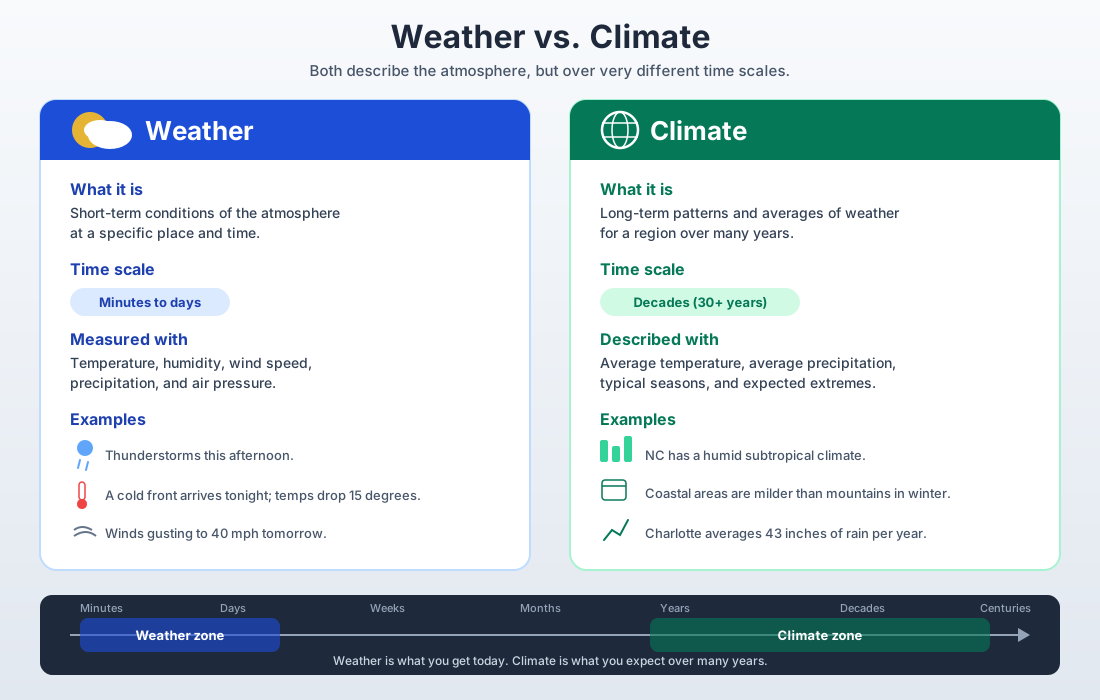
Weather describes the atmosphere right now or over the next few days: temperature, precipitation, humidity, wind, and air pressure.
Climate describes long-term patterns of weather for a region, including typical seasons and averages over 30 or more years.
A simple way to remember: weather is what you wear today; climate is what clothes are in your closet.
Answer questions Q-WC-1 through Q-WC-4 to check your understanding of weather and climate.
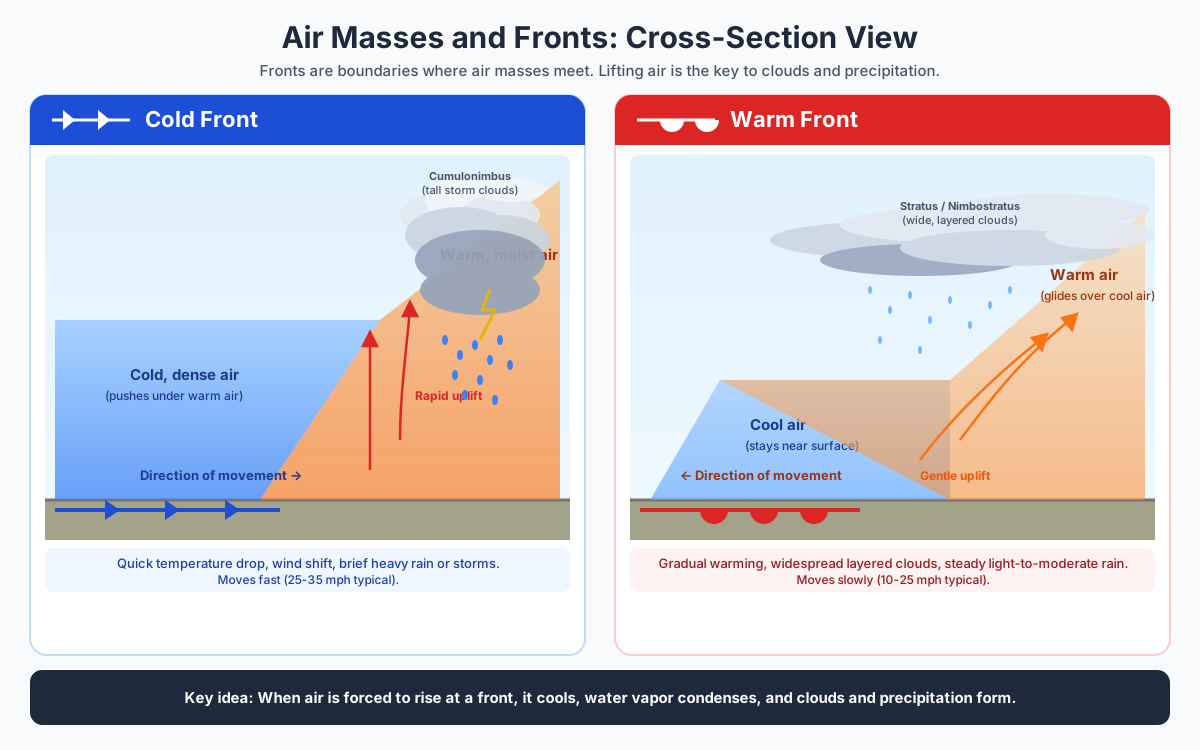
An air mass is a large body of air with similar temperature and humidity. A front is a boundary between air masses.
When air is forced to rise at a front, it cools and can condense into clouds:
- Cold fronts push warm air up steeply and quickly, often producing tall cumulonimbus clouds, heavy rain, and sometimes thunderstorms. They typically move fast (25–35 mph). - Warm fronts slide warm air gently over cooler air, producing widespread layered clouds and steadier, lighter precipitation. They move more slowly (10–25 mph).
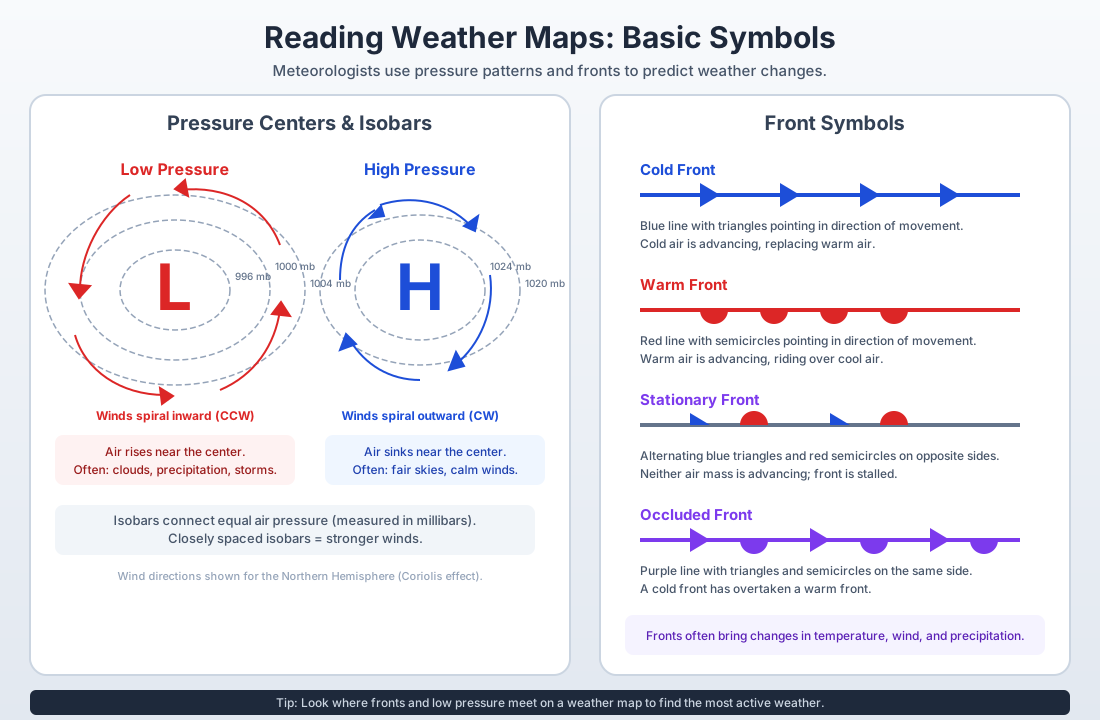
Weather maps show pressure patterns and fronts:
- Isobars are lines connecting points of equal air pressure (measured in millibars). Closely spaced isobars mean stronger winds. - Low pressure (L): Air rises, spirals inward counterclockwise (Northern Hemisphere). Often brings clouds and precipitation. - High pressure (H): Air sinks, spirals outward clockwise (Northern Hemisphere). Often brings fair, calm weather. - Front symbols show where air masses meet—the most active weather usually happens near fronts and low pressure centers.
Answer questions Q-FM-1 through Q-FM-4 to check your understanding of fronts and weather maps.
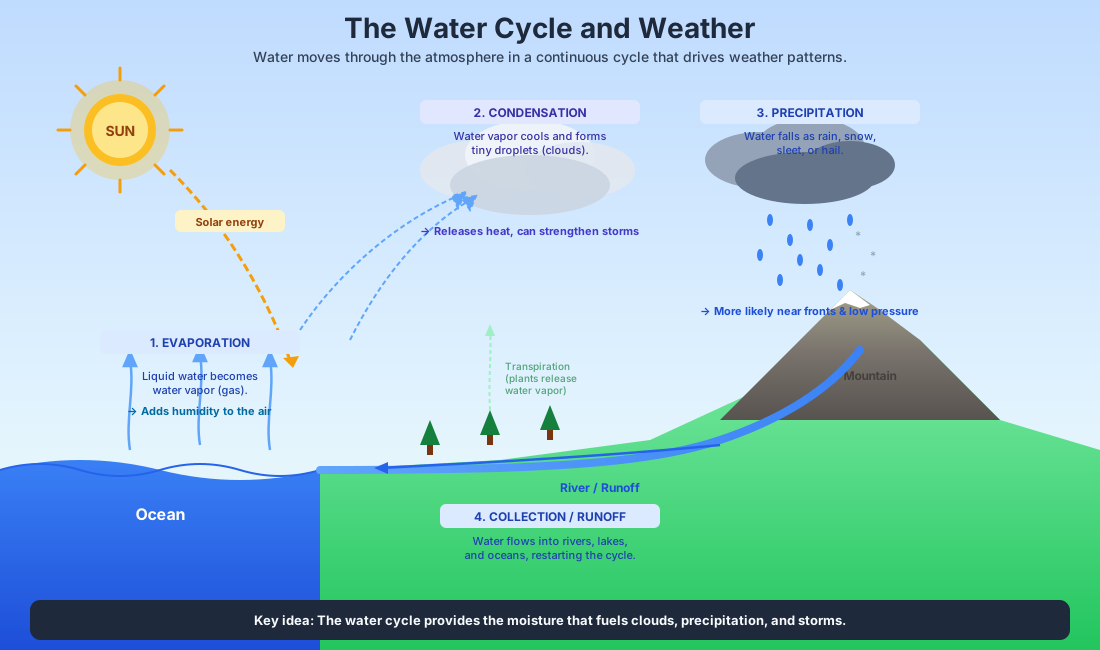
The water cycle affects weather because water vapor is fuel for clouds and precipitation:
1. Evaporation — The Sun heats water on Earth’s surface, turning it into water vapor (gas). This adds humidity to the air. 2. Condensation — When warm, moist air rises and cools, water vapor condenses into tiny droplets, forming clouds. This process releases heat that can strengthen rising air and storms. 3. Precipitation — When cloud droplets grow large enough, they fall as rain, snow, sleet, or hail. Precipitation is most likely where air is rising—near fronts and low pressure centers. 4. Collection — Water flows into rivers, lakes, and oceans, restarting the cycle.
Answer Q-EXIT-1 and Q-EXIT-2 to show what you learned today.
Assessment Questions
10 questionsWhich statement best describes climate?
Match each term to the best description.
Which pair correctly gives a weather example AND a climate example?
Humidity is the amount of ______ in the air.
A front is best described as:
Standards Alignment
Resource Details
- Subject
- Science
- Language
- EN-US
- Author
- Kris Tyte
- License
- CC-BY-4.0
- PRISM ID
- nc7-weather-climate-unit-intro