 USA Web School
Weather and Climate Unit Introduction
Grade 7 - NC Science ESS.7.1 Earth’s Systems: Weather and Climate
Learning Objectives
Differentiate between weather and climate using time scale and examples.
Explain how air masses and fronts create clouds and precipitation and relate to pressure systems.
Interpret basic weather map symbols (H/L, isobars, and front symbols) to make a simple prediction.
Describe the water cycle’s role in humidity, cloud formation, and precipitation patterns.
Hook and vocabulary
~4 minutesUnit question: What factors determine weather patterns, and how does climate differ from weather?
Today we build a model for how air moves, how water moves, and how we read weather data.
atmosphere • air mass • front • precipitation • humidity • barometric pressure • isobar • convection • Coriolis effect • jet stream • climate zone
Weather vs. climate model
~8 minutes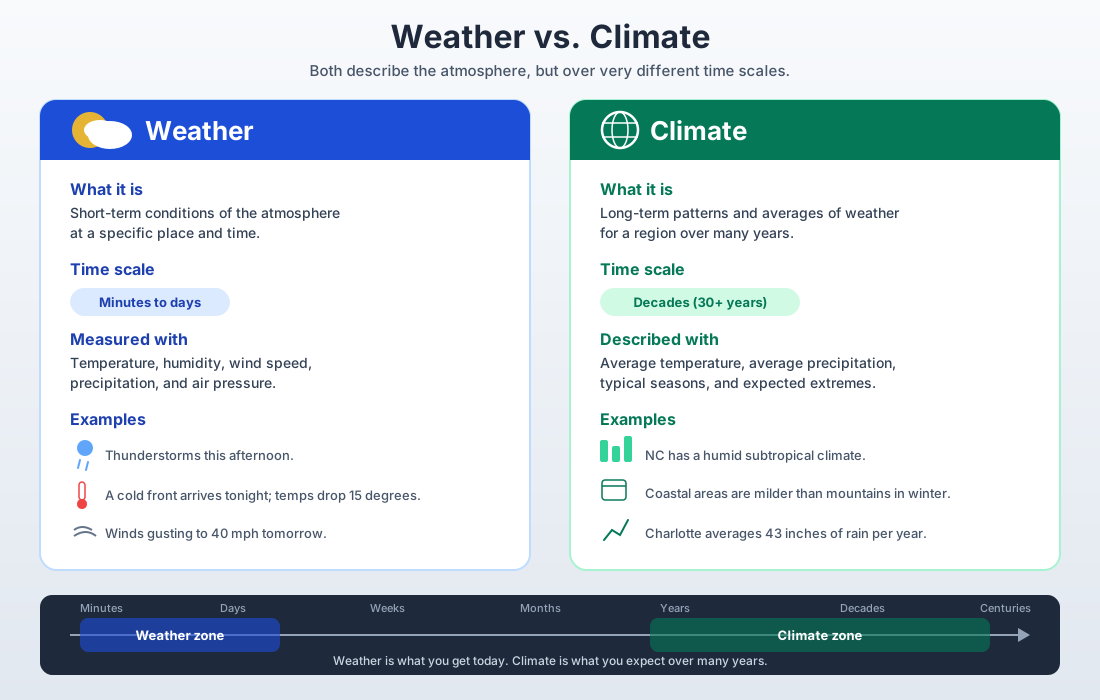
Weather describes the atmosphere right now or over the next few days: temperature, precipitation, humidity, wind, and air pressure.
Climate describes long-term patterns of weather for a region, including typical seasons and averages over 30 or more years.
A simple way to remember: weather is what you wear today; climate is what clothes are in your closet.
Check your understanding 1
~5 minutesAnswer questions Q-WC-1 through Q-WC-4 to check your understanding of weather and climate.
Which statement best describes climate?
Match each term to the best description.
Which pair correctly gives a weather example AND a climate example?
Humidity is the amount of ______ in the air.
Air masses and fronts
~10 minutes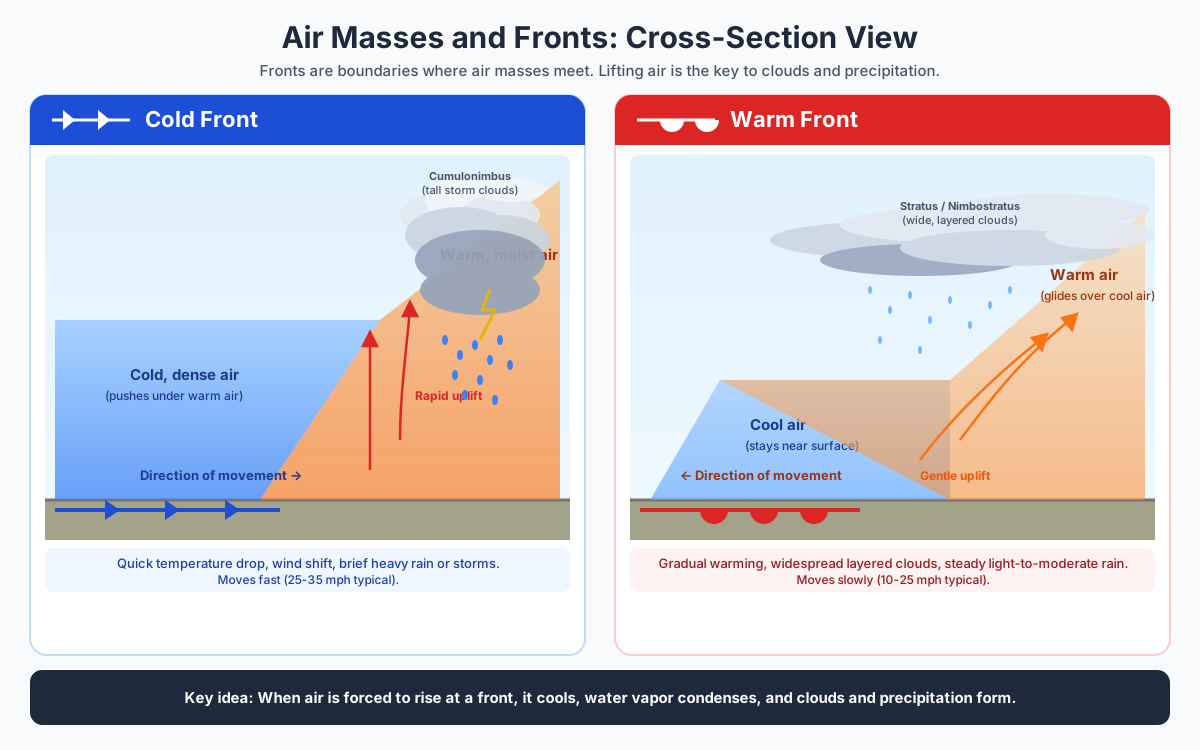
An air mass is a large body of air with similar temperature and humidity. A front is a boundary between air masses.
When air is forced to rise at a front, it cools and can condense into clouds:
- Cold fronts push warm air up steeply and quickly, often producing tall cumulonimbus clouds, heavy rain, and sometimes thunderstorms. They typically move fast (25–35 mph).
• Warm fronts slide warm air gently over cooler air, producing widespread layered clouds and steadier, lighter precipitation. They move more slowly (10–25 mph).
Weather maps and data
~7 minutes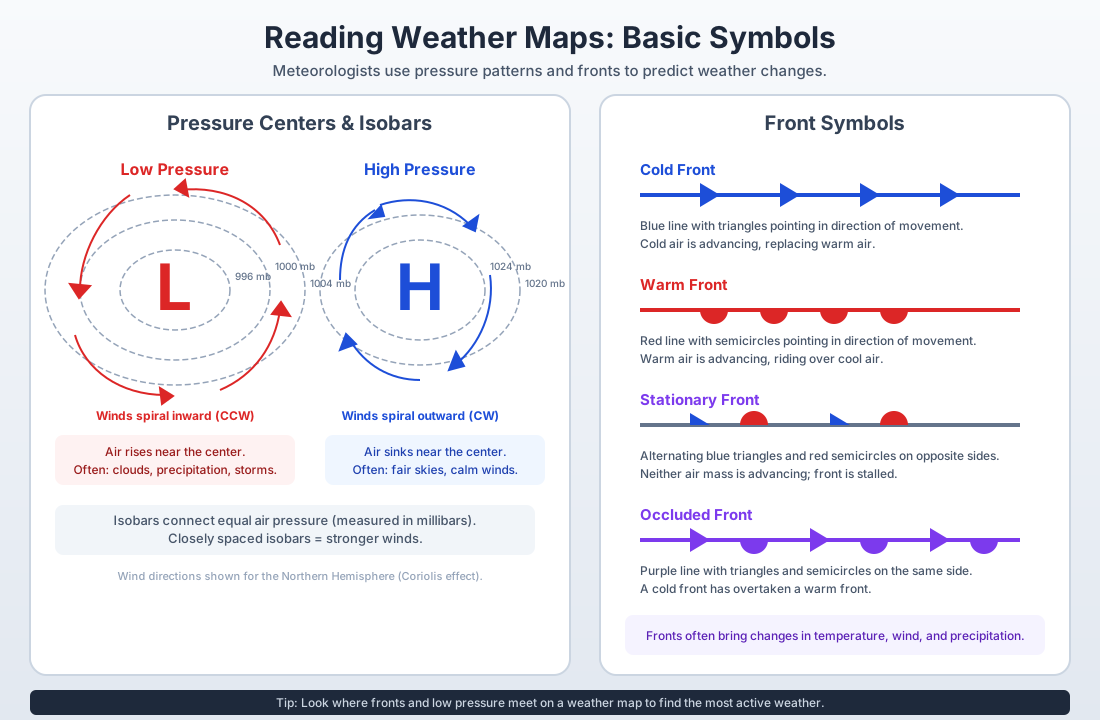
Weather maps show pressure patterns and fronts:
- Isobars are lines connecting points of equal air pressure (measured in millibars). Closely spaced isobars mean stronger winds.
• Low pressure (L): Air rises, spirals inward counterclockwise (Northern Hemisphere). Often brings clouds and precipitation.
• High pressure (H): Air sinks, spirals outward clockwise (Northern Hemisphere). Often brings fair, calm weather.
• Front symbols show where air masses meet—the most active weather usually happens near fronts and low pressure centers.
Check your understanding 2
~5 minutesAnswer questions Q-FM-1 through Q-FM-4 to check your understanding of fronts and weather maps.
A front is best described as:
Which conditions commonly increase the chance of clouds and precipitation? (Select all that apply)
Select all that apply.
Which statement correctly compares cold fronts and warm fronts?
On a weather map, areas near a strong low pressure center are most likely to have:
Water cycle and its role in weather
~4 minutes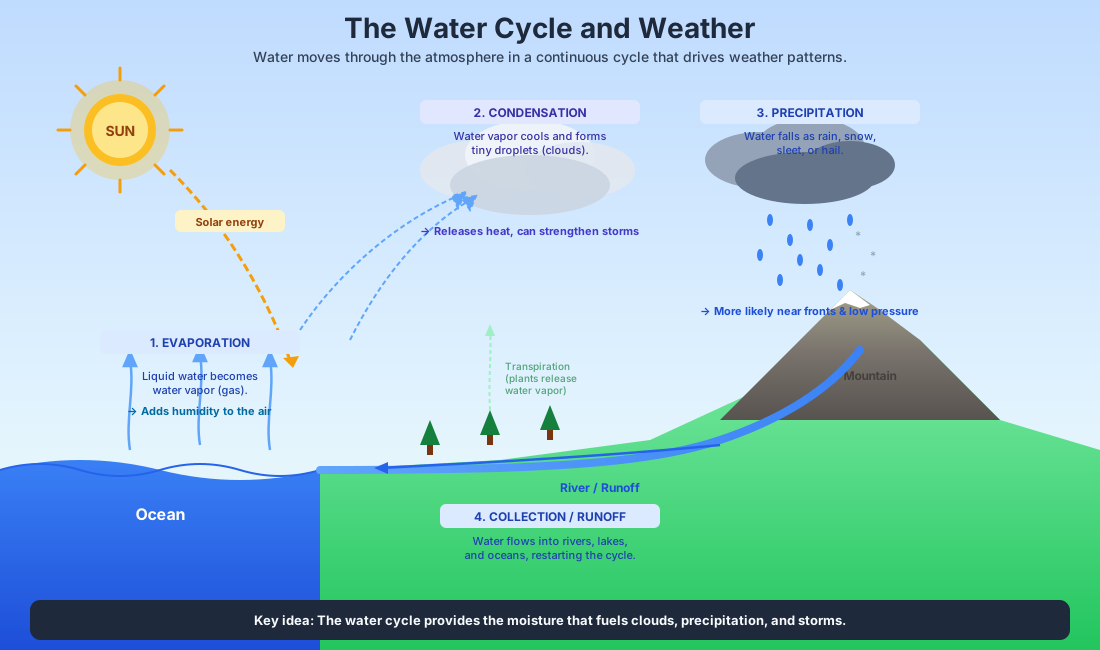
The water cycle affects weather because water vapor is fuel for clouds and precipitation:
1. Evaporation — The Sun heats water on Earth’s surface, turning it into water vapor (gas). This adds humidity to the air. 2. Condensation — When warm, moist air rises and cools, water vapor condenses into tiny droplets, forming clouds. This process releases heat that can strengthen rising air and storms. 3. Precipitation — When cloud droplets grow large enough, they fall as rain, snow, sleet, or hail. Precipitation is most likely where air is rising—near fronts and low pressure centers. 4. Collection — Water flows into rivers, lakes, and oceans, restarting the cycle.
Videos (NOAA fronts, NASA water cycle)
~7 minutesExit ticket
~5 minutesAnswer Q-EXIT-1 and Q-EXIT-2 to show what you learned today.
Which weather map features suggest that clouds and precipitation are likely nearby? (Select all that apply)
Select all that apply.
The Sun heats water, causing ______ which adds water vapor to the air. When moist air rises and cools, water vapor ______ into cloud droplets, eventually falling as ______.