
Earth's Systems Unit Introduction: Earth's Layers and the Rock Cycle
Grade 6 - NC 2023 Science Standards (Earth's Systems)
Description
A 45 minute unit introduction focused on Earth's internal layers and the rock cycle, including two check-your-understanding sections aligned to NC Grade 6 standards ESS.6.2.1 and ESS.6.2.3.
Learning Objectives
-
Describe Earth's crust, mantle, outer core, and inner core using a model (relative position, composition, and density).
-
Explain how rocks change through the rock cycle and connect rock weathering to soil formation using a model.
Content Preview
Preview of the PRISM content
Unit question: How does Earth's inside shape Earth's surface? Today we start by looking inside Earth (layers) and then zoom back out to how rocks change over time (the rock cycle).
crust, mantle, core, density, convection, magma, igneous, sedimentary, metamorphic, weathering, erosion, compaction, cementation
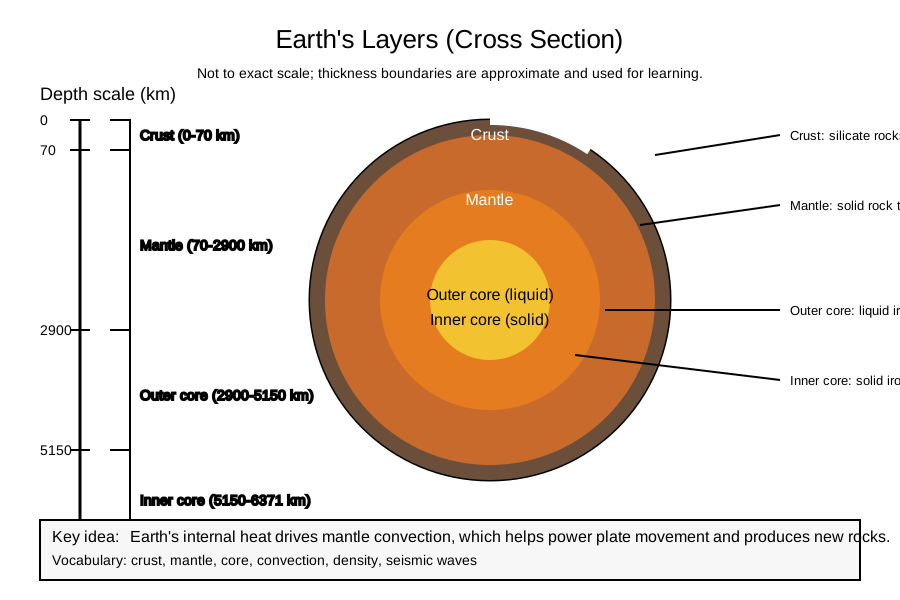
Earth has layers with different compositions and densities. The crust is thin and rocky. The mantle is much thicker and made of hot rock that is mostly solid but can flow slowly. The core is mostly iron and nickel. The outer core is liquid, and the inner core is solid due to very high pressure.
Answer the questions Q-LAY-1 through Q-LAY-4. Use the Earth layers diagram as your model.
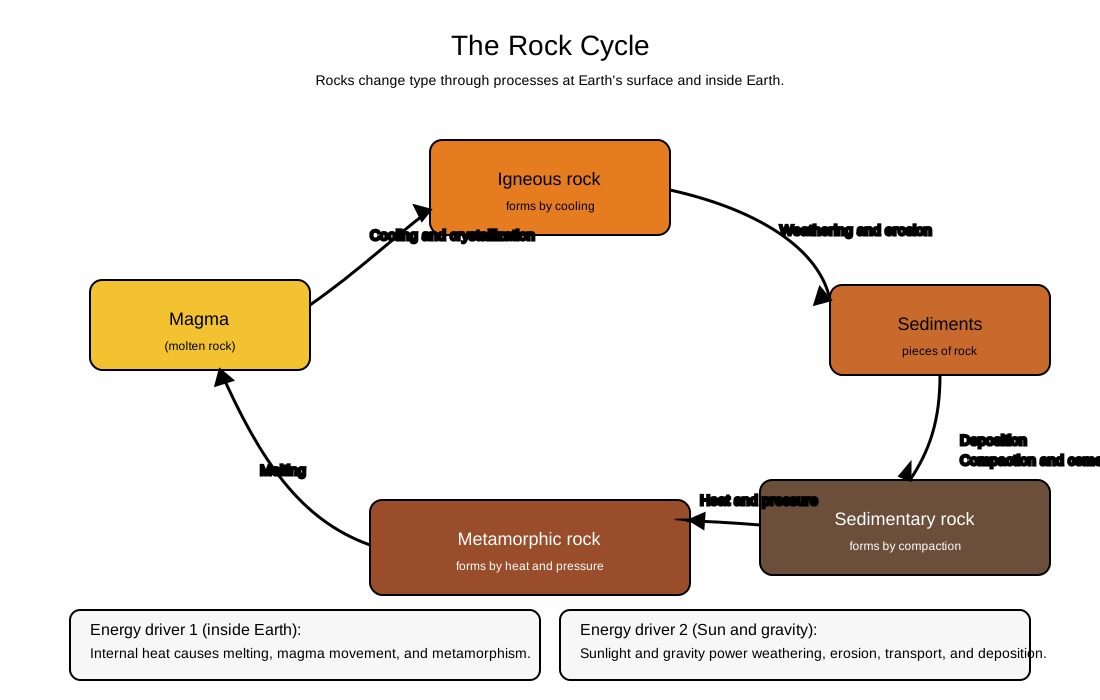
Rocks change when conditions change. Internal heat can melt rock into magma or change rock through heat and pressure. Surface processes like weathering and erosion break rocks into sediments. Over time, sediments can become sedimentary rock. Weathering also helps form soil, and different rocks can lead to different soil compositions.
Answer the questions Q-ROCK-1 through Q-ROCK-4. Use the rock cycle diagram as your model.
Answer Q-EXIT-1 and Q-EXIT-2. Keep answers short but specific.
Assessment Questions
10 questionsWhich layer is mostly liquid?
Place Earth's layers in order from the outside to the center.
The slow movement in the mantle caused by hotter material rising and cooler material sinking is called ______.
Scientists cannot drill to the core. What is one kind of evidence they use to learn about Earth's inside, and why does it help?
Which processes can help form sedimentary rock? (Select all that apply)
Standards Alignment
Resource Details
- Subject
- Science
- Language
- EN-US
- Author
- Kris Tyte
- License
- CC-BY-4.0
- PRISM ID
- nc6-earth-systems-layers-rockcycle-intro